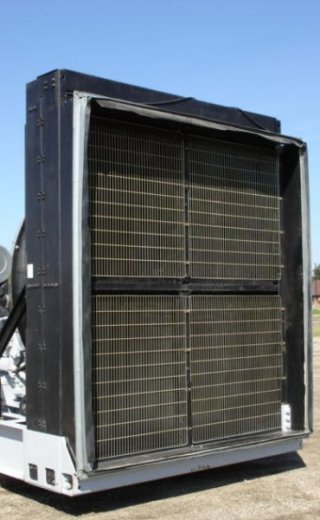
An industrial diesel generator (DG) is a powerhouse of reliability, but its performance is only as good as its cooling system. While many operators focus on fuel quality or oil levels, a silent killer often lurks inside the radiator: scaling.
Scaling can turn a minor maintenance oversight into a catastrophic engine failure. Here is everything you need to know about why it happens and how to prevent it.
What is Radiator Scaling?
Scaling occurs when minerals—primarily calcium and magnesium—precipitate out of the coolant and bond to the internal surfaces of the radiator tubes and engine jackets. Over time, these minerals form a hard, chalky layer that acts as an insulator.
Why is This Happening to Your DG Set?
The most common culprit is the use of hard water or tap water instead of demineralized (DM) water. When hard water is heated, the minerals settle out and bake onto the metal surfaces. Additionally, using low-quality coolant or neglecting the coolant-to-water ratio accelerates the process.
Warning Signs of Scaling
Frequent High-Temperature Alarms: The DG set trips on "High Water Temp" even under normal loads.
Discolored Coolant: If your coolant looks rusty, muddy, or has white flakes, scaling is likely present.
External "Sweating": You might see white crusty deposits around the radiator cap or hose connections.